Industrial YIMBYism
YIMBYism applies to every problem you want to solve, not just housing.

I. A Joke About Factory Access
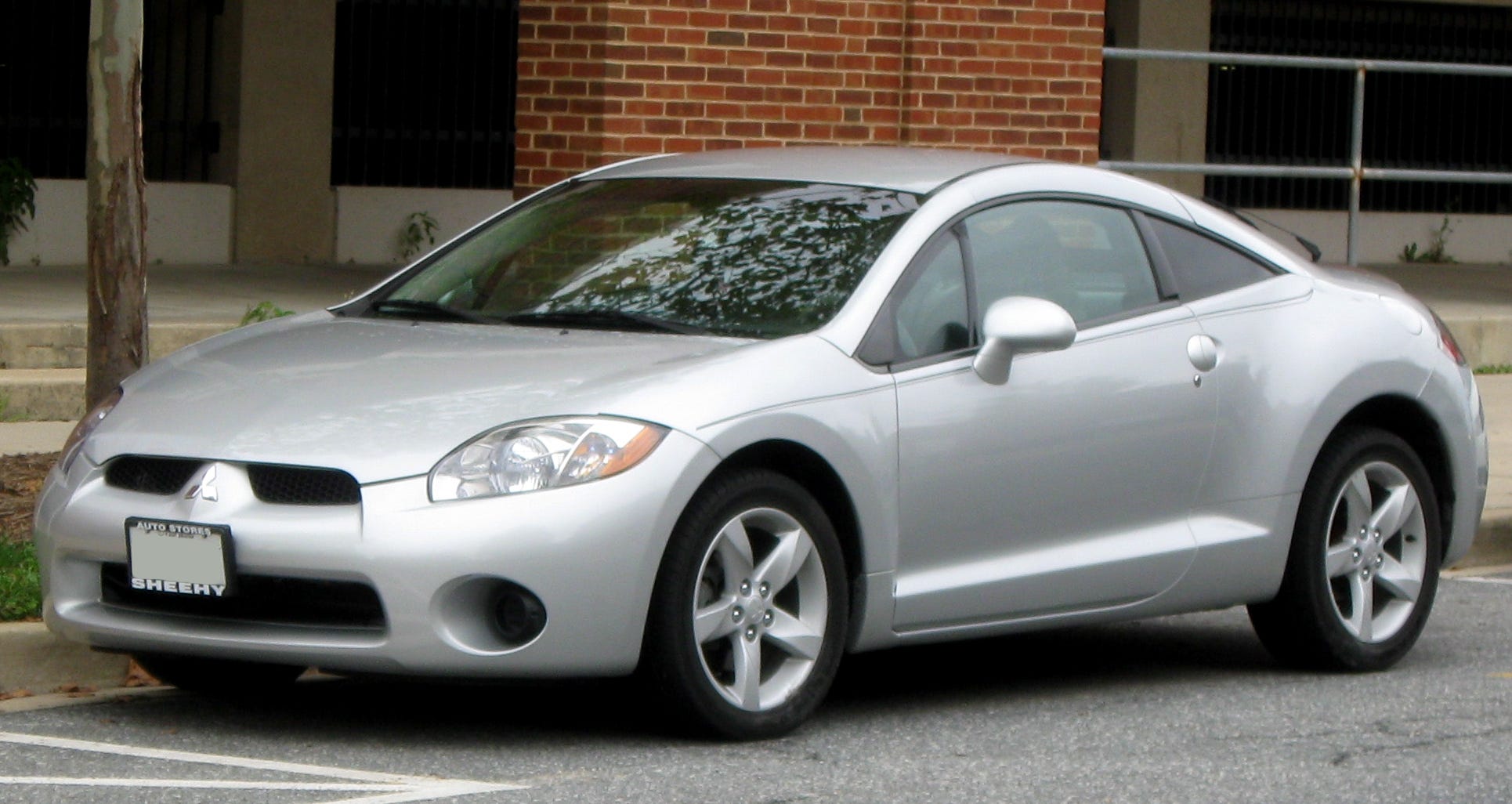
Two days ago, on Friday, I was listening to my typical Friday Podcast, which happens to be This Car Pod, the show hosted by automotive journalist Doug DeMuro. The main topic of this week’s episode was the new Rivian R2, but there was a tangent about the factory which will make many of the new vehicles. For context, the current primary Rivian factory is in Normal, Illinois, but they’re building a new factory just outside Atlanta, which will come online in 2027.
“One of the things they told me about the factory in Normal is that it’s hard to get to it. I think that this is why Mitsubishi (former factory owner) failed.”
*other hosts show incredulity*
“This is a theory… one of several I’m going to posit on this podcast… and the reason is they had this factory in Illinois. And when they wanted to visit it and say no, you have to make a different car, they had to fly to Chicago and then they had to take, like, a three hour bus ride to get to the factory. And I think that that, like, nine hour experience, they were just like, y’know what, we’re gonna let them continue building the [Mitsubishi] Eclipse, because it’s just too hard to go down there. And I think that, by building the factory in Georgia, near the Atlanta airport, it’s easy to get to. You see my point?
Okay. Obviously I do not literally think that the Mitsubishi attempt to enter the US market failed because the executives were too lazy to go to the factory and supervise production lines. But there is something here, something which began rolling around in my head when Sam D’Amico (the battery-induction stove guy) made a similar point on Odd Lots in April 2025.
Sam’s more seriously framed point was about engineering, and proximity of engineers to factories. His point was that Tesla engineers have very long commutes to their Fremont factory. Meanwhile in Shenzhen, BYD has its headquarters, and then it has an attached factory, and then across the street, there’s high density housing which houses the BYD engineers, so that they don’t have to have long commutes. In America, that situation is normally impossible because the engineers would move to neighborhoods which have NIMBY local governments, who would then unreasonably impede factory operations.
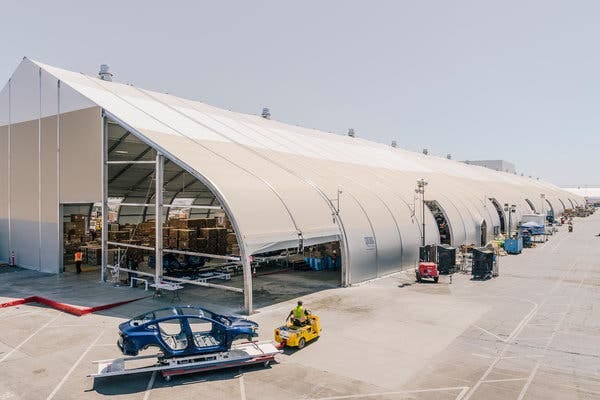
Tesla doesn’t have an ordinary CEO, however. It has Elon Musk. He got around the problem by simply expanding his factory using a temporary tent (see first image), allowing him to survive the NIMBYism that crushes every other manufacturer.
II. What Makes Success
It’s worth taking a step further here though. Tesla is an exceptional automaker which delivered two consecutive products which were at least a decade ahead of the industry. (The S/X counts as one product and so does the 3/Y). That doesn’t happen very often. Why not?
Tesla, in terms of perception, was (at the time the story happened) a tech company headquartered in the Bay Area. In theory, putting the Tesla headquarters in the Bay Area is a terrible idea. There are two clusters of automotive HQs, one in Detroit near legacy automakers, and one in the American South, where foreign brands tend to locate their North American headquarters (see: Porsche, Toyota, Mercedes). Locating a car company in one of those two clusters would mean more access to engineers with automotive industry experience, and more proximity to existing car factories. Tesla, of course, traded both of those things away. That’s the standard agglomeration effect story which applies to every industry.
But Tesla got several unusual advantages when it traded away the above conventional advantages. By headquartering in the Bay Area, it got access to tech talent that no other automaker had. That allowed it to develop an infotainment system that was also a decade ahead of its time, which in turn allowed Tesla to design a much simpler interior and save thousands of dollars a unit on manufacturing costs. (Screens are a lot cheaper to install than physical buttons.) Access to tech talent also allowed Tesla to pull a multi-year lead on autonomy relative to other auto manufacturers. Heck, most regular auto manufacturers still struggle with infotainment systems so badly that they mostly outsource it to Apple CarPlay in practice.

Nobody else makes this trade, because it wouldn’t have worked for anyone else. In this case, it only worked because Elon is a manufacturing genius. Nobody else would have put the manufacturing line in the tent, and consequently Tesla under any other CEO goes bankrupt.
III. Smart People, and High Prestige Jobs
It’s not really just about proximity to technology though. It’s also about access to smart young adults in general. If you’re a graduate of a prestigious university, you have an enormous amount of discretion regarding what metropolitan area you’re going to work in upon graduation, and to a lesser extent, where in that metropolitan area. Almost nobody with a truly free choice of city is going to pick Detroit over New York or San Francisco - let alone Normal, Illinois. To convince me to live in Normal, or Detroit, I think I would want triple my actual post-tax DC salary. I’m not sure I’m that unusual. By originally headquartering Tesla in the Bay Area, Elon was able to access significantly smarter engineers than if he had headquartered Tesla in Normal, or even Detroit. That talent, more than any specific tech advantage, explains Tesla’s success.
There was a lot of angst, beginning in the 90s and 2000s, that the smartest young adults in America were captured by trading, or banking, or technology, rather than building physical things. There’s nothing wrong with the trading, banking, or technology sectors but the current interest in “reindustrializing America” and countering China indicates that maybe there was some validity to that concern.
But consider it from the perspective of the young adults. Top-performing Americans want to work in jobs which allow them to live in relevant cities, provide good commutes, and offer good urban and employment amenities. The sectors which provide those employment opportunities are trading, banking, and technology. Obviously those ended up being the things that America was good at, and of course we’re bad at doing manufacturing, which does not provide those opportunities. If the smartest Americans were setting up manufacturing lines and automating industrial processes, instead of making software, we would probably be significantly better at those things.

IV. Proposing Some Reforms
This essay, read properly, is probably terrible news. Consider how appealing current white collar work is, and how deep reforms have to be in order to fix the problem. Young analysts at banks in New York live in hip, trending neighborhoods which effectively prohibit (or at least significantly hinder) car ownership, and definitely hinder car commuting. They take the subway to work. There, they meet their bosses, who live in leafy, all-residential suburbs with good schools and convenient, rail-based commutes. The New J.P. Morgan tower in Manhattan is not only built on top of Grand Central Terminal, but it also connects to an underground passageway leading to that station, as does every other building in a 3 block radius.
Factories obviously have a lower job concentration per mile than offices can, even in the very unusual event of a multi-level factory - and multi-level factories are usually avoided because they make assembly lines far less efficient. Consequently, they probably cannot go in truly dense places - but manufacturing facilities still need to be in transit-accessible, semi-urban places which are convenient to the urban core. To fix the housing crisis, suburbs need to allow multi-family housing by right, but that’s not the only crisis. Fixing the manufacturing crisis is the same - suburbs need to allow major non-polluting manufacturing facilities in urban and suburban areas.
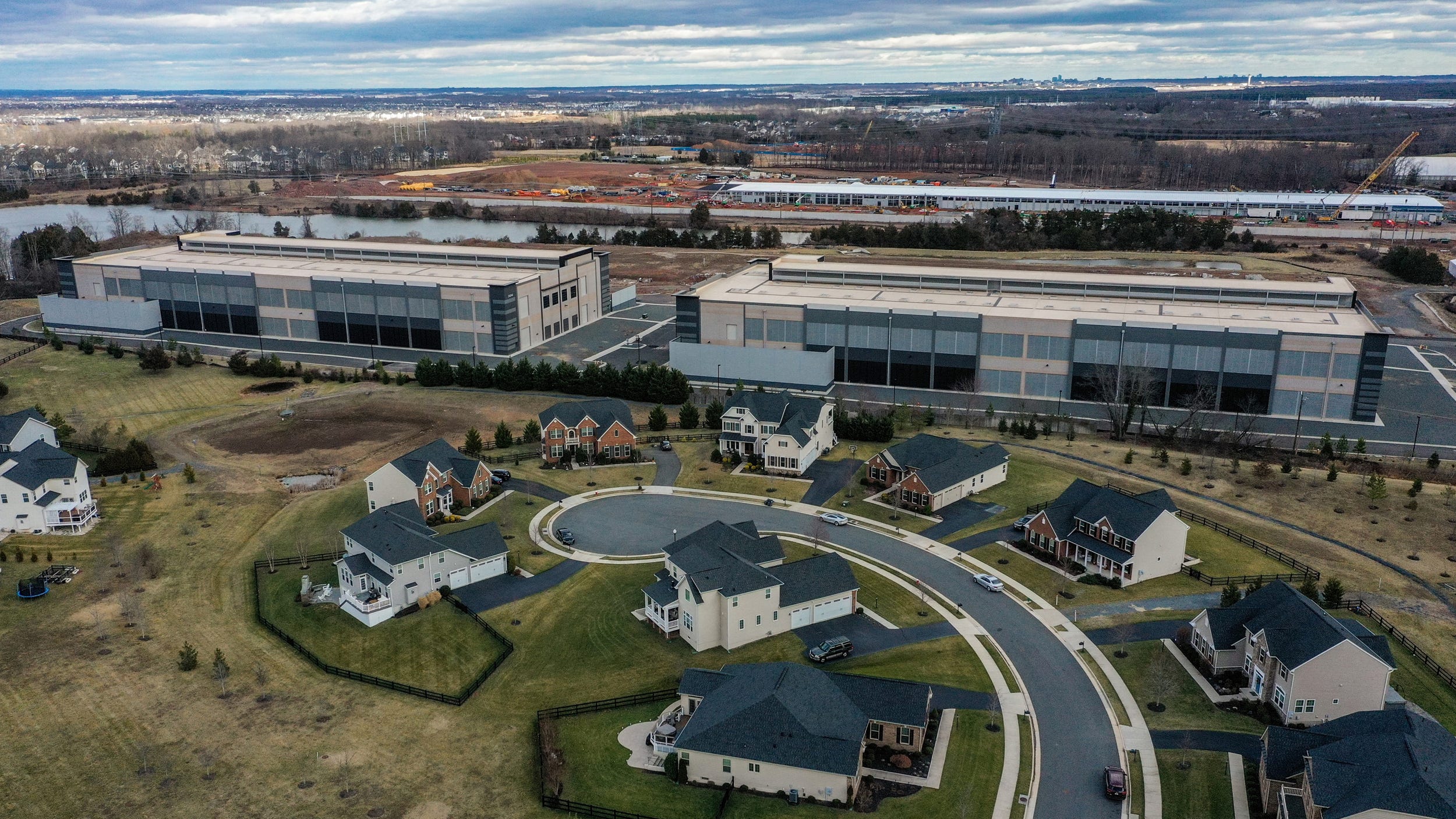
Worse, manufacturing facilities are unlike housing. Housing isn’t constrained at a municipal level but it is at least mostly contained at a regional level. But any region or state can free-ride on another state’s manufacturing prowess while the federal problem is solved - heck, every city free-riding on China’s manufacturing prowess and that’s why we’re in this situation in the first place. The conclusive, real fix to this problem would be senators and representatives forcing local governments across the country to accept non-polluting manufacturing facilities by-right on all low-density residentially zoned land.
Obviously that won’t happen. But the East Solano Plan people have the right idea by including manufacturing in their new city, and that solution needs to be scaled across the nation. I’d appreciate any ideas as to how.
Nice shoutout to Loudoun. The insanity around ~0 traffic, high tax revenue data centers has really demonstrated how opposed the public is to industry.
I see the current problem in Texas as well. Other than Arlington, which has an automotive factory, no other big city in Texas (San Antonio, Houston, Austin) will let factory owners build new housing near their factories because of zoning laws.
I've often wondered if smaller towns, near railroads, would fight the influx of a new factory site, along with new housing for the workers.
Texas has different infrastructure. The big cities (D/FW, Austin, Houston, San Antonio, Amarillo, Lubbock) all have international airports and rail depots. It would be easy to hop a flight to the major hubs, and then rent a car to drive to the factory sites.
I know of two towns that might welcome the additions.